When CRE AI Stopped Being Residential AI
A senior asset manager at a commercial real estate investment firm described to me the moment her team realized CRE AI was a distinct category. They had spent 2022 and 2023 evaluating residential real estate AI tools and adapting them for commercial use. The adaptation never worked well. Residential AI tools assumed property types, transaction patterns, and decision cadences that did not fit commercial real estate.
By mid-2024, CRE-specific AI tools had emerged at sufficient maturity that her firm could deploy them rather than continue adapting residential tools. The deployment produced measurable improvement in asset management workflows. The lesson was that CRE deserves its own AI category rather than being a subset of real estate AI.
The pattern of CRE-specific AI tools has accelerated through 2024 and 2025. Tools designed for commercial real estate workflows have matured. The use cases that produce results have become recognizable. Four categories cover most production deployments.
FHIR R4 Implementation
Why FHIR R4 certification does not equal FHIR interoperability, the specific data availability.
The Four CRE AI Use Categories
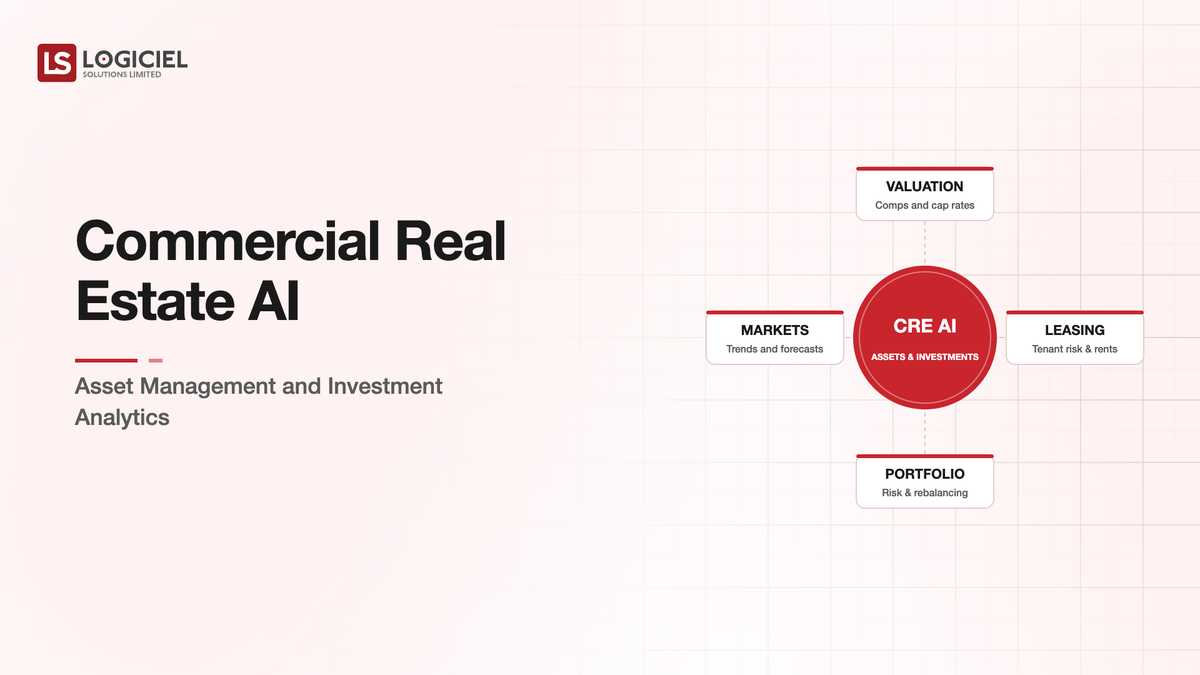
Commercial real estate AI applications cluster into four categories. Each one has specific characteristics and specific operational patterns.
The first category is asset management AI. The application supports the day-to-day management of commercial properties. Lease management, tenant communication, operating expense optimization, capital project planning. The AI handles routine work that historically required substantial asset manager time.
The category produces measurable operational improvement. Asset managers can manage more properties with similar attention because the AI handles work that scales linearly with property count. The improvement is real and visible in operational metrics.
The second category is investment analytics AI. The application supports investment decisions. Property underwriting, comparative market analysis, deal screening, portfolio analytics. The AI processes data faster than human analysts can and identifies patterns across larger datasets.
The category produces measurable analytical improvement. Underwriting cycles compress. Comparative analysis becomes more comprehensive. Pattern recognition catches opportunities or risks that traditional analysis would miss.
The third category is leasing AI. The application supports commercial leasing activity. Tenant prospecting, lease negotiation support, market positioning analysis, broker activity tracking. The AI augments the leasing professionals who handle commercial leasing.
The category produces measurable leasing improvement. Lead identification becomes more targeted. Negotiation preparation becomes more thorough. Market positioning becomes more data-driven.
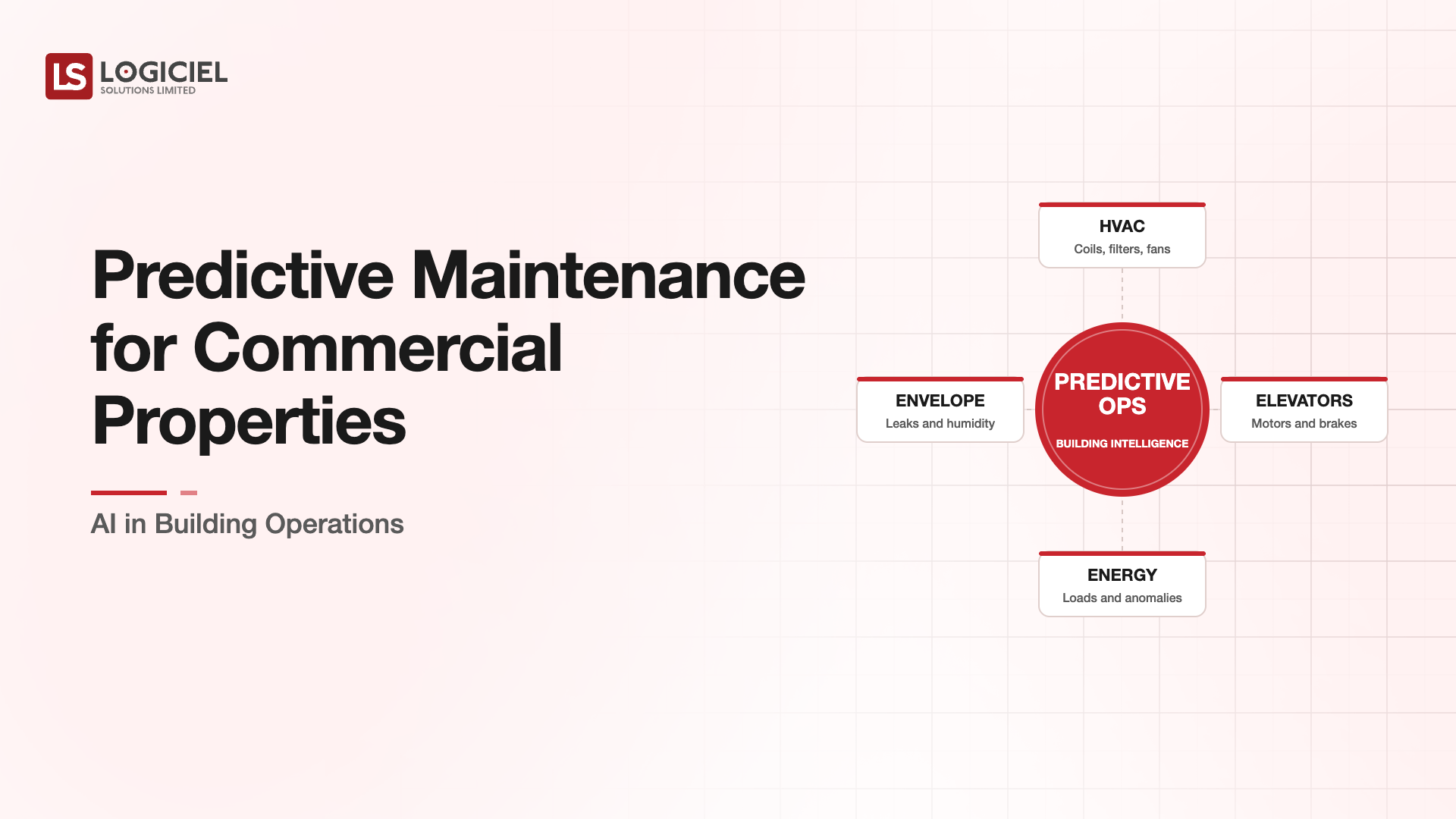
The fourth category is operations AI. The application supports building operations. Energy management, predictive maintenance, occupancy analytics, sustainability reporting. The AI handles operational analysis that traditional approaches could not do at scale.
The category produces measurable operational improvement. Energy costs decrease. Maintenance becomes more predictive. Sustainability reporting becomes more accurate.
What Distinguishes CRE AI From Residential AI
Four characteristics distinguish CRE AI from residential AI applications.
The first characteristic is property type diversity. Commercial real estate covers office, industrial, retail, multifamily, hospitality, healthcare, special purpose, and various specialized categories. Each has different operational patterns, different valuation drivers, and different tenant relationships. AI applications have to handle the diversity.
Residential AI typically focuses on single-family and small multifamily with relatively consistent patterns. The narrower scope simplifies the AI design. CRE AI cannot assume similar simplification.
The second characteristic is transaction complexity. Commercial real estate transactions involve longer due diligence, more sophisticated financing, more complex lease structures, and more parties than residential transactions. AI applications supporting transactions have to handle the complexity.
The third characteristic is investor sophistication. Commercial real estate investors include institutional investors with substantial analytical capability. AI applications serving institutional investors have to meet higher analytical standards than residential AI typically targets.
The fourth characteristic is data sparsity for many decisions. Commercial real estate transactions happen less frequently than residential transactions. Comparable sales data is sparser. Property characteristics are more unique. AI applications have to handle the data sparsity that residential AI does not face.
These characteristics shape what CRE AI applications look like and how they perform. Residential AI tools adapted for CRE typically struggle with one or more of these characteristics.
The Operational Realities of CRE AI Adoption
Three operational realities affect CRE AI adoption beyond the technical capability.
The first reality is data fragmentation. Commercial real estate data lives in many systems. Property management systems, leasing platforms, accounting systems, broker databases, market data services, investor portals all contain relevant data. The data does not aggregate naturally. AI applications often require substantial data integration before producing value.
The integration work is meaningful. Some AI vendors provide integration capabilities. Some require customer integration work. The operational reality is that AI applications without sufficient data integration produce limited value regardless of the AI capability.
The second reality is workflow integration. CRE AI applications produce value when they integrate with existing workflows that asset managers, investors, and leasing professionals actually use. Standalone AI applications that require parallel workflows produce limited adoption.
The integration work involves both technical integration with existing systems and process integration with how professionals work. Both matter. AI applications that get either wrong produce technical success and operational failure.
The third reality is professional adoption. CRE professionals have established workflows and methods. AI applications that ask them to change substantially face resistance regardless of technical capability. Applications that augment existing workflows face easier adoption.
The adoption pattern affects what AI applications succeed. Tools that respect professional expertise and augment professional work produce sustainable adoption. Tools that position themselves as replacements for professional judgment produce resistance.
What Goes Wrong With CRE AI Adoption
Three patterns of adoption failure recur.
The first pattern is adopting residential-derived AI tools without sufficient CRE adaptation. The tools produce results that look right but do not match commercial reality. Asset managers and investors lose trust in the tools when results diverge from professional judgment.
The remediation is selecting CRE-specific tools or investing in proper adaptation of general-purpose tools. The path of using residential tools directly rarely produces lasting value.
The second pattern is underinvesting in data integration. The team adopts an AI tool. The data integration is partial. The tool produces output based on incomplete data. The output looks plausible but misses important context. Users discover the limitations and stop using the tool.
The remediation is recognizing data integration as part of AI adoption cost. The integration work is unglamorous and necessary.
The third pattern is overpromising on AI capabilities. The vendor positions the AI as capable of more than it actually does. The adoption proceeds with high expectations. The reality falls short. Trust erodes faster than capability matures.
The remediation is honest expectation setting. AI applications have real capabilities and real limitations. The adoption decision should be based on the realistic capability rather than on aspirational marketing.
What This Costs
CRE AI deployment costs depend on portfolio size, use case scope, and vendor selection. For mid-market commercial real estate firms (managing several hundred million to a few billion in assets), annual AI investment typically lands in the $200K-$1.5M range across the four categories.
Larger firms invest substantially more, supporting more sophisticated capabilities across larger portfolios. Smaller firms invest less, often through SaaS platforms that provide AI capabilities without custom development.
The returns vary by category. Operations AI typically shows fastest measurable ROI through energy and maintenance cost reduction. Investment analytics AI shows ROI through improved deal selection. Leasing and asset management AI show ROI through operational efficiency and improved tenant outcomes.
For firms with the operational discipline to integrate AI properly, the returns justify the investment. For firms that adopt AI without integration discipline, the investment can outpace the returns.
Why 78.9% of Healthcare AI Projects Fail in Production
The four infrastructure failure modes that determine whether a promising clinical AI pilot becomes a production system.
Call to Action
What Logiciel Does Here
Logiciel works with commercial real estate technology and operations teams adopting AI applications or building AI-enabled platforms. The work is typically structured around use case prioritization, integration architecture, and adoption design appropriate to the firm's operational maturity.
The AI in Real Estate: Beyond Valuation framework covers the broader real estate AI patterns. The Data Engineering for Real Estate Platforms framework covers the data integration patterns that CRE AI depends on.
A 30-minute working session is enough to assess your current AI adoption against the four-category framework.
Frequently Asked Questions
Should I build CRE AI capability internally or buy?
For most firms, buy. CRE-specific AI vendors have matured to the point that building from scratch rarely produces value commensurate with cost. Large firms with specific differentiation needs sometimes build; mid-market firms almost always benefit from buy.
How do I evaluate CRE AI vendors?
Through specific tests on your actual workflows. Vendor demos use favorable data and scenarios. Real evaluation runs your actual data through their tools and assesses results against professional judgment.
What about AI in private equity real estate?
PE real estate fits investment analytics AI most strongly. The analytical sophistication required matches what investment analytics AI provides. Other categories (asset management, operations) apply when the PE firm owns operating businesses rather than passive investments.
How does AI integration affect property valuation?
AI-assisted valuation has improved through 2024 and 2025 but remains supplementary to professional appraisal rather than substitutional. AI provides data analysis and pattern recognition; appraisers provide judgment and certification.
What about fair housing implications for CRE AI?
Commercial real estate has different fair housing considerations than residential real estate. Some apply (employment-related real estate, certain mixed-use). Most CRE fair housing concerns are narrower than residential. The compliance design should match the specific property types. Sources: - NAREIT, "Real Estate Investment Performance and AI Adoption 2024" - CBRE Research, "Commercial Real Estate Technology Outlook 2024"